|
|
Header Text Extracting the Most Value from Natural Gas Resources
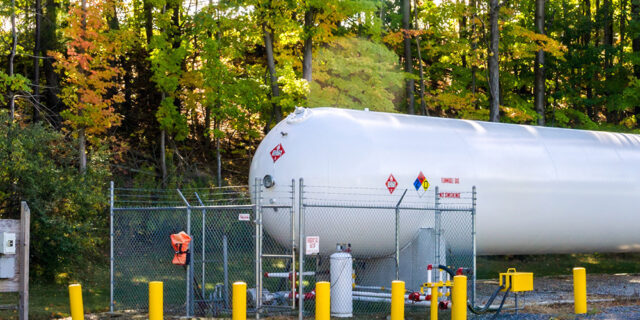
Oil and natural gas producers are increasingly targeting liquids-rich gas plays, and efficient processing of natural gas liquids (NGLs) is a growing industry need. The ethane, methane, pentane, and propane co-produced with natural gas are commonly used as petrochemical feedstocks, or they can be used for energy sources, depending on market conditions.
Column One GTI has developed a cost-effective NGL recovery process, and additional gas processing technologies developed by our researchers are playing an important role in natural gas and syngas clean-up.
We are active in all operations for GTL processes: reforming to make syngas (a mix of CO and H2); syngas processing; and syngas conversion to liquid fuels. Our organization has the competencies and experience to test all three of these stages in our facilities.
Key Initiatives
Key Initiative Developing advanced liquids separation and recovery technology GTI has patented a high-efficiency natural gas liquids (NGL) recovery process that is cost-effective over a wide range of ethane recovery. The technology has the potential to achieve substantial energy savings compared to state-of-the-art dehydration and cryogenic or refrigerated oil technologies.
Besides cost savings at high liquids recovery, the GTI process can easily vary ethane recovery from 98 to 2% as market prices and local demands change without the typical penalties in operating costs.
The last step needed prior to commercialization is a 5 MMscfd plant demonstration. GTI is looking for partners with existing processing plants or access to rich gas to fund and host a demonstration of this in exchange for an advantaged position in commercial deployment. Key Initiative Producing a drop-in gasoline product and on-site power from stranded or low-value natural gas resourcesGTI is developing a low-capital-cost and high-energy-efficient process for co-producing gasoline and power from natural gas. GTI’s partial oxidation gas turbine (POGT) syngas production technology offers a method to monetize stranded and low-quality natural gas in relatively small-scale plants when integrated with efficient GTL processes.
This method produces both power and liquid fuel, making it an attractive option for waste-associated gas now flared in oil production fields (including offshore platforms), or other niche applications. The amount of co-produced power can be controlled, allowing for flexibility as on-site electricity demands change.
The equipment is modular, and the size of the process plant can be tailored to match the amount of natural gas at the on-site location, minimizing the plant footprint. Key Initiative Purifying natural gas with hollow fiber contactor technologyGTI is partnering with PoroGen Corporation to develop a versatile technology to purify natural gas with much smaller size and lower cost than conventional options. The technology is suitable for achieving pipeline specification or the much tighter requirements in floating LNG production. A Joint Industry Program (JIP)— partnering with major international companies—is creating design engineering documentation for a field demonstration. Key Initiative Upgrading natural gas to lower the cost of meeting pipeline or LNG specificationsMuch of the domestic natural gas produced requires the removal of contaminants before the gas can be transported, and this midstream cleanup is a significant contributor to the total cost of production. GTI has technology platforms and expertise in natural gas cleanup systems.
Morphysorb® acid gas removal physical solvent has several unique and desirable properties for treating high concentrations of acid gas. This technology is licensed to Uhde, a partner with GTI in its development, and has been commercially deployed for natural gas processing.
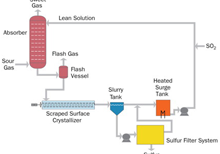
GTI has also developed a multi-component clean-up process for sulfur removal and recovery from natural gas. It has the potential to significantly reduce the complexity and costs of the current clean-up train. The process has been independently estimated to substantially reduce the cost of sulfur recovery by replacing traditional Claus and tail-gas treating units. Testing is under way of a co-current reactor design to further reduce capital costs. Key Initiative Using thermochemical processes to produce liquid transportation fuels from renewable resources GTI experts tested a novel thermal, catalytic process (IH2) to produce liquid transportation fuels from woody biomass, agricultural residues, algae, and aquatic plants.
Techno-economic and lifecycle analysis results from the project illustrate that the technology can convert biomass to gasoline and diesel blending components for less than $2.00/gallon with greater than 90% reduction in greenhouse gas emissions for feeds of wood and agricultural residues. DOE funding enabled rapid development of the IH2 technology from initial proof-of-principle experiments through continuous testing in a 50 kg/day pilot plant, and provided support for recently completed engineering work to design a 1 ton/day demonstration unit and techno-economics for a commercial-scale 2,000 ton/day unit.
Results led to three subsequent DOE contracts. GTI signed an exclusive worldwide licensing agreement with CRI Catalyst Company (CRI) for the technology in early 2011, and CRI invested the capital to build a pilot-scale plant at GTI and perform additional research.
In late 2012, DOE awarded GTI another project to evaluate the IH2 process in a configuration to maximize integration with existing crude oil refineries with project partners CRI Catalyst and Valero.
Technical Report: Biomass to Gasoline and Diesel Using Integrated Hydropyrolysis and Hydroconversion Key Initiative Exploring the biological conversion of natural gas-based feedstocks into value-added transportation fuels and chemicalsScientists at GTI are looking at ways of engineering microorganisms capable of using methane as a source of carbon and energy to produce liquid transportation fuels and chemicals from natural gas feedstocks.
Two technological approaches are currently being evaluated. The “direct” production route involves the engineering of biocatalysts designed to produce infrastructure-compatible transportation fuels and chemicals. The “indirect” route involves a two-stage process – the growth of engineered microorganisms on methane to produce a high quality, carbon rich biomass (stage 1) that could be converted via GTI’s IH2 technology into hydrocarbon fuel (stage 2). Key Initiative Using liquefaction technology to create LNG GTI developed and patented a small-scale liquefaction technology that creates liquefied natural gas (LNG) from landfill gas, wastewater bio-gas, digester gas, and stranded natural gas reserves. The liquefaction system incorporates features that enable cost-effective capital pricing to be achieved at a small scale while also having greater conversion efficiency.
The technology is in use at the Altamont Landfill near Livermore, California, which produces 13,000 gallons of LNG per day from renewable landfill gas. GTI partnered with Waste Management and Linde North America for demonstration at the site. Key Initiative Converting natural gas or other gaseous hydrocarbons into gasoline, diesel, or jet fuel through GTL refinery processesGTI’s biomass gasification technology has been developed and commercialized by Andritz/Carbona. Campaigns testing integrated syngas production and processing systems are currently being carried out at GTI's gasification campus in support of biomass-to-liquids (BTL) process development.
Testing has provided Andritz/Carbona and their client UPM-Kymmene, a global forestry company, with process data to support the design of a commercial biofuels plant in Europe.
The BTL system uses an Andritz/Carbona gasifier, based on GTI fluidized bed technology, to produce synthesis gas that feeds a Fischer-Tropsch second generation biodiesel production facility. Environmental assessments for commercial projects have been completed for two sites, and a final funding decision on the commercial plant at a nominal 5000 BBL/day production capacity is expected by the end of 2012. Key Initiative Making green gasoline in an integrated biorefineryDownstream of gas purification is the catalytic process to convert syngas into fuels and/or chemicals. GTI is working with Haldor-Topsøe to demonstrate their TIGAS® process to convert syngas into gasoline. This project will convert wood to “green” gasoline by fully integrating and optimizing pilot-scale gasification, syngas cleanup, and syngas conversion processes at GTI’s gasification campus.
A GTI-based Andritz/Carbona biomass gasifier with a downstream catalytic tar reformer will produce syngas from wood. The GTI Morphysorb® process will be used for acid gas cleanup, and the Haldor Topsøe TIGAS process will convert the syngas into gasoline. Other partners in this project include UPM-Kymmene and Phillips66. Key Initiative Cleaning up raw syngas to separate components of value and reduce certain components to acceptable levels Morphysorb® acid gas removal physical solvent is being used in natural gas processing to treat high concentrations of acid gas. It is also being used as syngas clean-up for GTL processes and testing is underway for pre-combustion carbon capture (gasification-based power plants) as well.
GTI is developing a process for sulfur removal and recovery from syngas. It is a multi-component clean-up process that has the potential to significantly reduce the complexity and costs of the current syngas clean-up train. “Bench-scale” testing, which is at a fairly large scale, has been completed, and preliminary performance results and economics suggest a 40% cost savings compared to competing technologies. The technology has already been proven in treating natural gas.
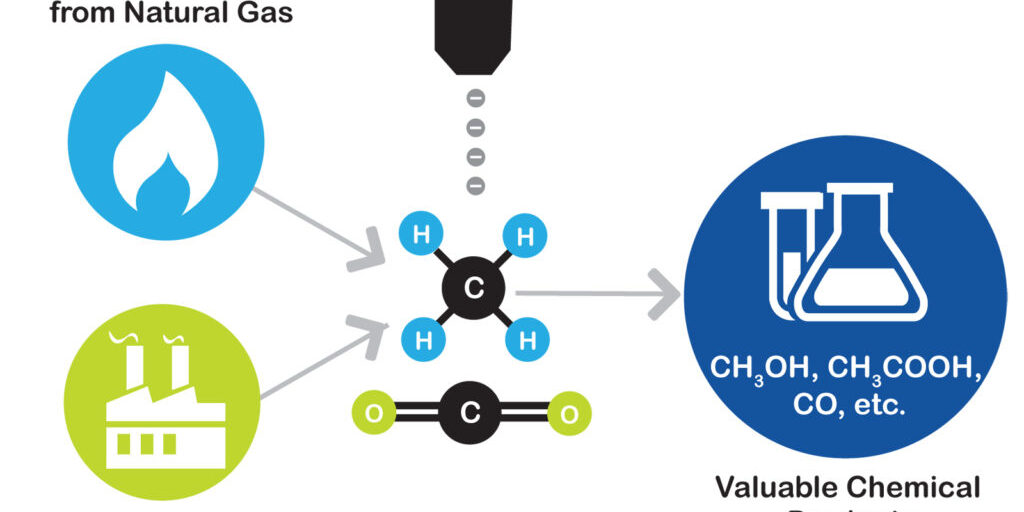
A program with three major oil companies for research to understand and improve direct injection H2S scavenging has been completed, and GTI has developed a computer model of system performance. The patented system is operating at four transmission company storage fields in accordance with the GTI-provided design. Key Initiative Converting natural gas into liquid methanol efficiently and cost-effectivelyIn November 2012, GTI was notified of a DOE ARPA-E award of nearly $775,000 to convert methane to methanol fuel via a low-temperature process. In this project, GTI will develop a new process to convert natural gas into liquid methanol with a hydrogen byproduct. Current methods to produce liquid fuels from natural gas require massive capital expenditures and significant energy expenditures. GTI will create a new process that uses metal oxide catalysts that are continuously regenerated in a reactor that is similar to a battery. This process is more efficient and less capital-intensive than current approaches and has the added benefit of operating at room temperature.
|
|
Contact us: energyconversion@gastechnology.org
Column Two ExpertiseGasification Technology Development
Subquality Gas Upgrading
Syngas Cleanup and Separation Technologies
|